

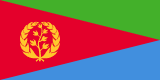
 Eritrea
Africa · Eastern Africa
Access to essential health services is patchy.
127th most peaceful of 161
- Global Peace Index
- 2.412lower is more peacefulMedium safetyIEP GPI · 2026
Below-average life expectancy
- Life expectancy
- 68.9years, at birthLowWorld Bank · 2024
- Health coverage
- 40WHO universal health coverage index, 0 to 100Very lowWHO · 2023
- Air pollution
- 23.8PM2.5, micrograms per cubic metre, national averageHighWHO · 2023
- Unemployment rate
- 6%share of the labour force without a jobWorld Bank · 2025
Eritrea's Human Development Index
178th of 193 in UNDP's 2023 ranking, 41st of 54 in Africa.
UNDP builds the index from three dimensions: a long and healthy life, being knowledgeable, and a decent standard of living. They are measured by life expectancy at birth, mean and expected years of schooling, and gross national income per capita. UNDP Human Development Report 2025.
Nearest countries by HDI
Full HDI ranking, all 193 countriesHDI since 2005
Year by yearHuman development rose from 0.474 in 2005 to 0.503 in 2023.
UNDP Human Development Report, 2025 edition. 19 annual values, none interpolated.
Twenty years here
Year by yearThe world report- Life expectancy at birth
- 68.9 years2024at birthUp 8.3 years from 60.6 years in 2005
- Urban population
- 35%2025of people in towns and citiesDown 1 point from 35% in 2006
- Births per woman
- 3.682024births per womanDown 1.25 from 4.93 in 2005
- Renewable share of energy
- 81%2021of energy usedUp 11 points from 70% in 2004
- Access to electricity
- 55%2024of people with electricityUp 21 points from 35% in 2005
- Infant mortality
- 252024deaths before age one, per 1,000 birthsDown 19 from 43 in 2005
- CO2 emissions per person
- 0.2 t2024of CO2 per person a yearLevel with 2005
- Forest area
- 9%2023of land under forestDown 1 point from 9% in 2004
World Bank, from the first to the last observed year of each indicator; each has its own window.
Our take
Africa's North Korea: one of the world's most closed states, with compulsory military service. The case against is patchy access to essential health services, short lives and polluted air.
About Eritrea
Eritrea is a small East African country on the Red Sea coast with a landscape ranging from the hot Danakil lowlands to the cool, Italian-influenced highlands around the capital Asmara. Asmara itself is a striking open-air museum of 1930s Italian modernist architecture, now a UNESCO World Heritage Site. The country is one of the most isolated in the world, which gives it an eerie, time-stopped quality that fascinates the small number of travellers who visit.
Practical facts
- CapitalAsmara
- LanguagesArabic, English, Tigrinya
- CurrencyEritrean nakfa (ERN)
- Area121,178 km²
- Plug typeType C/E/L
- Drives on theright
Everything we hold on Eritrea
Money and cost2
- Price level ratioWorld Bank ICP
- 0.586Low
- Corporate TaxWikipedia · 2024
- 34%
Work2
- UnemploymentWorld Bank · 2025
- 6%
- Public Holidaysdate.nager.at · 2025
- 10
Safety3
- Peace IndexIEP Global Peace Index · 2026
- 2.412Medium safety
- Road Deaths / 100kWHO GHO · 2021
- 17.7High
- Disaster RiskWorld Risk Index · 2022
- 7.7High
Health13
- Life ExpectancyWorld Bank · 2024
- 68.9Low
- Infant MortalityWorld Bank · 2024
- 24.7High
- UHC Service CoverageWHO GHO · 2023
- 40Very low
- Physicians / 1kWorld Bank · 2022
- 0.090Very low
- Hospital BedsWorld Bank · 2023
- 1Very low
- Out-of-Pocket Health %World Bank · 2023
- 48.4%Very high
- Healthcare SpendWorld Bank · 2023
- $28
- PM2.5 concentrationWHO GHO · 2023
- 23.8High
- Air-pollution Deaths / 100kWHO GHO · 2021
- 238.3Very high
- ObesityWHO GHO · 2024
- 4.3%Very low
- Raised Blood GlucoseWHO GHO · 2014
- 5.5%Very low
- Suicide Rate / 100kWHO GHO · 2021
- 13.2High
- Alcohol L / capitaWHO GHO · 2024
- 1.400
Governance and freedom8
- Rule of LawWorld Bank WGI · 2025
- -1.77Very low
- CorruptionWorld Bank WGI · 2025
- -1.61Very low
- Political StabilityWorld Bank WGI · 2025
- -0.60Low
- Government EffectivenessWorld Bank WGI · 2025
- -1.53Very low
- Regulatory QualityWorld Bank WGI · 2025
- -2.11Very low
- DemocracyEIU Democracy Index · 2025
- 1.970Very low
- Freedom HouseFreedom House · 2025
- 3Very low
- Press FreedomRSF World Press Freedom Index · 2026
- 10.2Very serious
Quality of life1
- Human DevelopmentUNDP Human Development Report · 2023
- 0.503Low
People and planet20
- PopulationWorld Bank · 2025
- 3,607,003
- AreaWorld Bank
- 121,178 km²
- Median AgeWorld Bank age-group shares
- 25.7
- Population GrowthWorld Bank · 2025
- 2.00%
- Urban PopulationWorld Bank · 2025
- 34.5%
- Net MigrationWorld Bank · 2025
- -6,698
- Foreign-Born %UN DESA International Migrant Stock · 2024
- 0.4%
- Fertility RateWorld Bank · 2024
- 3.68
- ChristianPew Research · 2020
- 46.7%
- MuslimPew Research · 2020
- 51.7%
- HinduPew Research · 2020
- 0%
- BuddhistPew Research · 2020
- 0%
- JewishPew Research · 2020
- 0%
- UnaffiliatedPew Research · 2020
- 1.1%
- Other religionsPew Research · 2020
- 0.6%
- CO₂ / CapitaWorld Bank · 2024
- 0.220Very low
- RenewablesWorld Bank · 2021
- 80.7%Very high
- Forest CoverWorld Bank · 2023
- 8.6%
- Climate VulnerabilityND-GAIN Country Index · 2023
- 0.592Very high
- Climate ReadinessND-GAIN Country Index · 2023
- 0.213Very low
Other1
- Receive RemittanceWorld Bank Remittance Prices Worldwide · 2023
- 9.2%
 Djibouti
 Ethiopia
 Sudan
Quick answers
What is Eritrea's Human Development Index?
Eritrea's Human Development Index is 0.503 for 2023 (UNDP Human Development Report 2025), ranked #178 of 193 by UNDP.
Is Eritrea safe?
Eritrea scores 2.41 on the Global Peace Index (lower is more peaceful), ranked #127 of 161 countries by the Institute for Economics & Peace. That measures national-level peace, not street crime; both are covered below.
What is life expectancy in Eritrea?
Life expectancy at birth in Eritrea is 68.9 yrs (World Bank), ranked #139 of 195 countries.